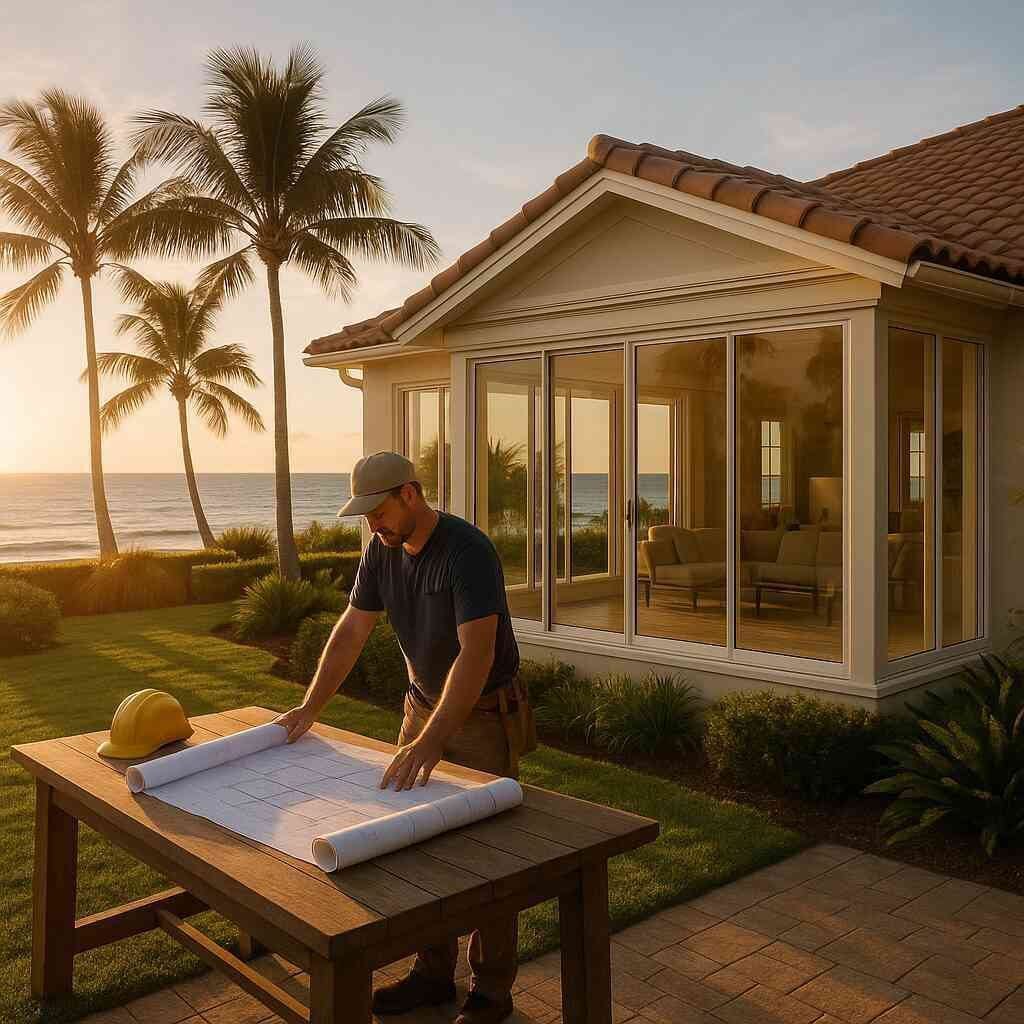
The Blueprint for Success: Understanding the 2026 Permit Landscape
Embarking on a construction project in Delray Beach requires a thorough understanding of the local regulatory environment. The Delray Beach building permit process is a foundational step that ensures your project’s safety, legality, and long-term value. Navigating this landscape successfully demands more than just filling out forms; it requires strategic insight into evolving Palm Beach County permit requirements and a proactive approach to planning. As a premier construction company in the area, we see firsthand how a solid blueprint for permits sets the stage for seamless project execution. This initial phase is where foresight meets regulation, transforming potential obstacles into a clear path forward.
Decoding Delray Beach and Palm Beach County Permit Requirements
The first layer of any project involves decoding the specific mandates set by local authorities. Palm Beach County permit requirements are detailed and multifaceted, designed to uphold safety and community standards. For instance, requirements differ significantly between a simple bathroom renovation and a full custom home build, impacting everything from submitted documents to inspection schedules. Homeowners and developers must familiarize themselves with the latest building code updates for Palm Beach County in 2026, which often introduce new energy efficiency or resilience standards. A common pitfall is underestimating the need for detailed site plans and professional engineering stamps, which are non-negotiable for approval. Proactively addressing these specifics prevents frustrating delays and costly revisions during the building department submission phase.
Furthermore, the requirements extend beyond the physical build to include environmental and impact reviews. Projects near sensitive coastal areas or within specific community districts may trigger additional scrutiny. It is essential to consult the official top 7 permit requirements for Delray Beach construction 2026 to ensure your application package is complete from the start. This checklist serves as an invaluable tool for both residential and commercial projects, covering essentials from land use to structural design. Partnering with a knowledgeable licensed general contractor who navigates these waters daily can demystify this complex process. Their expertise turns a daunting list of requirements into a manageable, step-by-step action plan.
Navigating Residential vs. Commercial Building Permits
Understanding the distinct pathways for residential construction permits and commercial building permits is crucial for a smooth application journey. The intent, scope, and impact of these projects differ, leading to varied approval criteria and review processes. For home renovations or new construction of a single-family home, the focus often lies on life-safety systems, energy codes, and adherence to neighborhood character. Conversely, commercial building permits involve more stringent reviews for public access, parking, fire suppression, and ADA compliance, which can significantly impact the permit approval timeline. Each category demands a tailored approach to document preparation and stakeholder communication.
For homeowners in Delray Beach remodeling their property, the process may seem more straightforward but is no less critical. Even a kitchen renovation that involves moving plumbing or electrical systems requires a permit to ensure all work meets current Florida building codes. The distinction is vital because using the wrong application type is a primary cause of common permit delays. A seasoned construction manager understands these nuances and can accurately classify your project from the outset. They ensure that whether you’re building a Boca Raton renovation or a West Palm Beach office build-out, your application aligns perfectly with the governing authority’s expectations.
The Critical Role of Local Zoning Regulations in Delray Beach
Before a single drawing is finalized, your project must conform to local zoning regulations in Delray Beach. Zoning laws dictate what you can build, where you can build it, and how you can use your property, serving as the community’s long-term planning blueprint. These regulations cover critical aspects like setbacks, height restrictions, lot coverage, and permissible land uses, which directly influence your site plan. Ignoring zoning can lead to a rejected application before it even reaches the building department, wasting valuable time and resources. Therefore, planning and zoning approval is a mandatory precursor to the formal building permit process.
Engaging in a pre-application meeting with the planning department can provide invaluable clarity. This step is especially important for projects in historic districts or for proposing a home addition that may push lot coverage limits. Zoning also interacts with coastal construction regulations, adding another layer of review for properties east of the coastal construction control line. A professional Delray Beach general contractor will have extensive experience navigating these overlapping jurisdictions. They can advocate for your project, potentially securing variances or ensuring your design is compliant from its conception, thereby safeguarding your investment and vision.
The Architectural Journey: From Application to Approval
Once the preliminary zoning and planning hurdles are cleared, the architectural journey toward permit approval begins in earnest. This phase transforms your vision into a codified set of plans that municipal reviewers can analyze and approve. It is a meticulous process where precision in documentation directly correlates with the speed of approval. Every line on a drawing and every specification in an engineer’s report must align with authoritative standards. This journey from application to approval is where professional construction management proves its worth, coordinating architects, engineers, and consultants to create a unified submission.
Mastering Construction Document Preparation and Site Plan Review
The cornerstone of a successful permit application is impeccable construction document preparation. These documents are the legal and technical instructions for your project, encompassing architectural drawings, engineering calculations, and material specifications. Incomplete or inaccurate documents are the most frequent cause of application rejection, leading to lengthy common permit delays. A comprehensive site plan review is equally critical, detailing the project’s placement on the lot, drainage patterns, and access for emergency services. This review ensures your project harmonizes with the surrounding environment and infrastructure.
Professional construction document preparation involves a collaborative effort between your architect, interior designer, and structural engineer. This team ensures that aesthetic choices also meet structural and code requirements. For a custom home or significant home improvement, these documents become especially complex. Utilizing a detailed permit application checklist provided by your licensed contractor can prevent oversights. This proactive approach minimizes back-and-forth with the building department submission team, keeping your project on schedule. Thorough preparation here is an investment that pays dividends throughout the entire construction project.
Structural Engineering Approval and Florida Building Codes Compliance
Achieving structural engineering approval is a non-negotiable milestone, particularly in South Florida where resilience against high winds and hurricanes is paramount. A licensed structural engineer must stamp the plans, certifying that the design will safely support all intended loads and resist environmental forces. This step is deeply intertwined with Florida building codes, which are among the most stringent in the nation, especially regarding wind-borne debris protection and flood zone construction. Compliance is not merely about legality; it is about ensuring the longevity and safety of your investment for years to come.
The codes are updated regularly, and staying current is essential. For example, recent emphasis on continuous load paths and impact-resistant openings affects both new construction and major renovations. A general contractor with deep local experience, like those serving Boynton Beach renovations and Boca Raton remodelers, will have an intimate knowledge of these evolving standards. They ensure your project’s engineering not only meets but often exceeds the minimum code requirements, providing superior protection and potentially lowering insurance costs. This rigorous approval process is your best defense against future structural issues.
Optimizing the Permit Approval Timeline and Avoiding Common Delays
A clear understanding of the typical permit approval timeline manages expectations and facilitates better project planning. While timelines can vary based on project complexity and municipal workload, a standard residential renovation might take several weeks, whereas a commercial or custom home project can take months. Proactive strategies are key to optimizing the permit approval timeline. Submitting a complete, code-compliant application package is the most effective way to avoid the common permit delays that frustrate so many owners, such as requests for additional information (RAIs).
Effective communication with the plan examiners can also smooth the process. Furthermore, understanding the rhythms of the local building department, such as peak submission times, allows for strategic scheduling. The best contractors leverage long-standing relationships and a reputation for quality submissions to foster a more efficient review. They also monitor the application’s status diligently, ready to respond quickly to any reviewer queries. By anticipating potential hurdles like environmental impact review needs or special district overlays, a skilled team can navigate the timeline predictably, turning waiting time into productive pre-construction planning.
“My company found RENOVA Contractors to provide excellent design ideas and high-quality construction work for our project. They provided the Architect and worked extensively with him in implementing a design that met our design and budget expectations. We are very pleased with the quality of the work that was completed and, just as importantly, their willingness to cooperate in achieving the common goal of opening our newly renovated office building. They have been reliable and dependable in completing the project to our highest expectations. We especially enjoyed working with Brian the owner, Curtis project manager and estimator and Andy their head General Contractor on the job. They had a combined 30 years experience with construction projects in Delray Beach. Their attention to detail is outstanding and they were always responsive to our needs and requests. I would highly recommend their services to others for any design and build construction projects.” – Jonathan G., a 5 star review from RENOVA on Google Business Reviews
Coastal Construction Regulations and Historic District Considerations
Delray Beach’s unique charm comes with specific regulatory frameworks, namely coastal construction regulations and historic district permits. Projects within the Coastal Construction Control Line (CCCL) face additional scrutiny to protect beach dunes, marine turtles, and property from storm surge. These regulations may mandate specific foundation types, elevation requirements, and even construction windows to avoid disrupting wildlife. Navigating these rules requires specialized knowledge to ensure your oceanfront dream home or renovation is both beautiful and compliant.

Similarly, undertaking a project in one of Delray Beach’s cherished historic districts is a privilege that carries responsibility. The historic district permit process involves review by a historic preservation board to ensure changes are sympathetic to the area’s architectural character. This can affect everything from window styles to exterior paint colors and roofing materials. While this adds a layer of review, it protects the community’s heritage and can enhance property values. A construction company experienced in these delicate projects understands how to blend modern amenities with historic integrity, guiding you through a collaborative approval process with preservation authorities.
The Permit Fee Schedule and Expedited Permitting Process
Understanding the permit fee schedule is an important part of project budgeting. Fees are typically calculated based on the project’s valuation, square footage, or number of plumbing and electrical fixtures. They cover the cost of the municipality’s plan review, inspections, and administrative services. While fees are a necessary part of the process, they should be viewed as an investment in your property’s safety, legality, and resale value. An experienced construction manager can provide an accurate fee estimate early on, preventing unexpected financial surprises.
For projects where time is of the essence, inquiring about an expedited permitting process is wise. Many jurisdictions offer expedited review for an additional fee, which can significantly shorten the permit approval timeline. This option can be invaluable for commercial tenants needing a fast build-out or homeowners facing urgent repair situations. Expedited review still requires a complete and compliant application; it simply moves it to the front of the review queue. Discussing this possibility with your licensed general contractor at the project’s outset allows for a strategic decision that aligns with your overall schedule and financial plan.
Building with Confidence: The Final Stages and Professional Partnership
With permits securely in hand, the construction phase begins, but the regulatory journey continues through inspections to final approval. This is the stage where planning meets reality, and every detail must align with the approved plans. Building with confidence means having a team that not only executes quality craftsmanship but also expertly manages the ongoing relationship with the building department. A professional partnership ensures that the vision permitted is the vision built, culminating in the legal occupancy and enjoyment of your new space.
Navigating Florida Building Inspections with Precision
The Florida building inspections process is a series of critical checkpoints that verify the work complies with the approved plans and codes. These inspections occur at defined phases, such as after foundation pour, framing, rough-ins for electrical and plumbing, and insulation. Navigating Florida building inspections with precision requires meticulous adherence to the schedule and strict compliance with the documented specifications. Failing an inspection can cause significant delays, as work must be corrected and re-inspected, halting subsequent trades. Therefore, a proactive and detail-oriented approach from your construction team is paramount.
A superior construction manager will often conduct their own thorough pre-inspections before the official municipal inspector arrives. This practice identifies and resolves any minor issues beforehand, ensuring a first-time pass. Clear communication with the inspector, providing easy access to the site and all relevant documentation, also fosters a smooth process. For specialized systems, like solar panels or pools, additional inspections from different departments may be required. Understanding this layered inspection protocol is a key service provided by experienced South Florida contractors, who coordinate these steps seamlessly to maintain project momentum.
Securing Your Final Inspection and Certificate of Occupancy
The culmination of the entire building permit process is the final inspection and the issuance of the Certificate of Occupancy (C of O). The final inspection is a comprehensive review of the completed project to ensure everything is finished according to code and the approved plans. Once this inspection is passed, the building department issues the C of O, which is the legal document authorizing the use and occupancy of the new or renovated structure. For commercial projects, this certificate is essential before opening your doors to the public or employees.
Securing this final sign-off requires that all previous inspection approvals are closed, all fees are paid, and the site is clean and safe. Any outstanding items, even minor punch-list details, can hold up this critical milestone. A professional general contractor manages this process diligently, ensuring no administrative loose ends remain. They understand that the C of O is not just a piece of paper but the key to your project’s completion, representing compliance, safety, and quality. Their systematic approach guarantees you can move in or open for business without legal or regulatory concerns.
Why Partnering with a Licensed Contractor Transforms the Permit Process
The difference between navigating permits alone and partnering with a licensed contractor is profound. A licensed general contractor brings established relationships with local building departments, a deep understanding of Florida building codes, and the administrative machinery to handle the entire submission and inspection process. They act as your advocate and expert guide, translating complex regulations into actionable steps. This partnership transforms a daunting bureaucratic maze into a managed, predictable workflow, saving you immense time, stress, and potential cost overruns.
Moreover, a reputable contractor’s credibility can positively influence the review process, as officials trust submissions from known, reliable professionals. They also assume liability for the work’s compliance, protecting you from the risks of permit violations. From the initial construction document preparation to the final inspection, their oversight ensures continuity and accountability. For homeowners seeking Delray Beach remodeling or developers embarking on new construction, this professional partnership is not an expense but a strategic investment in the project’s success, value, and longevity.
Avoiding Costly Permit Violations in New Construction and Renovations
Avoiding costly permit violations is one of the most compelling reasons to engage professional permit assistance. A violation can occur if work proceeds without a permit, deviates significantly from approved plans, or fails inspections repeatedly. The consequences are severe, including stop-work orders, hefty fines, mandatory demolition of non-compliant work, and complications when selling the property. These setbacks can devastate your budget and timeline. Proactive compliance is always simpler and cheaper than reactive correction.
A seasoned construction company institutes rigorous quality control and documentation procedures to prevent violations. They ensure all subcontractors are working from the latest approved drawings and that any necessary field adjustments are documented and, if required, submitted for approval as amendments. This disciplined approach is crucial for both new construction and renovations, where unseen conditions can sometimes necessitate changes. Their expertise in the renovation permit guide and new construction permit application processes acts as your primary safeguard, ensuring your project builds equity and peace of mind, not liabilities.
Frequently Asked Questions
Question: What is the first step in the building permit process Delray Beach for a new construction or major renovation in 2026?
Answer: The critical first step is understanding and complying with local zoning regulations in Delray Beach and the latest Palm Beach County permit requirements. Before any design is finalized, you must ensure your project aligns with setback, height, and land-use rules. This often involves a pre-application meeting with the planning department, especially for projects in historic districts or coastal zones. At RENOVA, as your licensed general contractor serving all of South Florida, we begin every construction project with this essential due diligence. We navigate the planning and zoning approval process for you, ensuring your vision for a custom home or home addition has a solid foundation for approval, preventing costly rejections and delays right from the start.
Question: How long does the permit approval timeline typically take, and how can RENOVA help avoid common permit delays?
Answer: The permit approval timeline varies greatly; a residential renovation may take several weeks, while a complex custom home or commercial building permit can take months. The most common permit delays stem from incomplete construction document preparation, code non-compliance, or unforeseen zoning issues. RENOVA’s construction management expertise is your best defense against these delays. Our team, including in-house coordination with architects and engineers, ensures every site plan review and structural engineering approval is meticulously prepared to meet Florida building codes. We submit complete, compliant packages to the building department and proactively manage the review, leveraging our reputation as one of the best contractors in Delray Beach to help streamline your path to approval.
Question: Why is partnering with a licensed contractor like RENOVA crucial for navigating the blog post ‘How to Navigate Delray Beach Building Permits for 2026’?
Answer: The blog outlines a complex landscape of evolving codes, coastal construction regulations, and historic district permits. Navigating this alone is risky and time-consuming. Partnering with a licensed contractor like RENOVA transforms the entire process. We provide full licensed contractor permit assistance, from the initial permit application checklist through the final inspection certificate of occupancy. Our deep knowledge of the Florida building codes and established relationships with local officials mean we can accurately forecast the permit fee schedule, advise on an expedited permitting process if needed, and most importantly, assume liability for compliance. This professional partnership protects your investment and turns a daunting process into a managed, predictable workflow.
Question: What are the key differences between residential construction permits and commercial building permits in Palm Beach County?
Answer: The core difference lies in the scope of review and intent. Residential construction permits for projects like Delray Beach remodeling or a kitchen renovation focus on life-safety, energy codes, and single-family use. Commercial building permits involve more stringent reviews for public access, parking, fire suppression, ADA compliance, and often a longer environmental impact review. The submission requirements and inspection protocols are more complex. As a full-service construction company experienced in both sectors across South Florida, RENOVA’s construction managers expertly guide each project type. Whether you’re a Boca Raton renovation contractor working on a restaurant or a Delray Beach home builder crafting a custom home, we ensure your new construction permit application is correctly categorized and comprehensively prepared for its specific regulatory path.
Question: How does RENOVA ensure a project passes all Florida building inspections and secures the final Certificate of Occupancy?
Answer: Securing your final inspection certificate of occupancy is the culmination of our meticulous construction management process. RENOVA doesn’t just wait for inspections; we actively prepare for them. Our supervisors conduct rigorous pre-inspections at every phase-foundation, framing, rough-ins-to ensure work perfectly matches the approved construction document preparation before the official inspector arrives. This precision in navigating Florida building inspections minimizes failures and re-inspections. We coordinate all necessary trades and specialty inspections, manage all paperwork, and ensure the site is ready. Our commitment as your Delray Beach construction company is to hand you the keys to your completed, compliant, and beautiful residential or commercial project without any lingering regulatory concerns.