

Introduction: The Blueprint for Commercial Success in South Florida
Navigating the Complex Landscape of Commercial Construction
Embarking on a commercial construction project in South Florida presents a unique set of challenges and opportunities. The dynamic environment demands a sophisticated approach to navigate zoning laws, environmental considerations, and market demands. Successful commercial construction project management transforms these complexities into a streamlined pathway toward your business goals. It requires a deep understanding of local nuances, from soil conditions to seasonal weather patterns that can impact your timeline. Ultimately, mastering this landscape is the first critical step toward ensuring your investment yields the intended operational and financial returns.
Why Project Management is the Keystone of Your Investment
Superior project management is the non-negotiable foundation upon which all successful commercial builds are constructed. It is the disciplined framework that aligns vision with execution, safeguarding your capital and vision throughout the entire journey. This systematic approach directly influences your project’s budget, schedule, quality, and safety outcomes from groundbreaking to final delivery. Investing in expert construction management is not an added cost but a strategic decision that mitigates risk and maximizes value. It turns the daunting process of creating a commercial space into a predictable, controlled, and successful endeavor.
Setting the Stage for Excellence from Delray Beach to West Palm Beach
From the bustling corridors of Boca Raton to the thriving business centers of West Palm Beach, the standard for commercial builds is exceptionally high. Property owners and developers expect a seamless process that respects their investment and timeline. A premier construction company operating in this region must embody local expertise and a commitment to excellence that matches the area’s prestige. This begins with a partner who understands the specific permit timelines and regulatory environment of Palm Beach County. Setting this stage for excellence ensures your project not only meets but exceeds the demanding standards of the South Florida commercial market.
1) The Foundational Phase: Mastering Pre-Construction Planning and the Bid Process
Conducting Comprehensive Site Analysis and Due Diligence
Thorough pre-construction planning is the most powerful tool for preventing costly surprises. This phase begins with an exhaustive site analysis, examining topography, soil reports, utility access, and existing structures. Concurrent due diligence involves verifying zoning restrictions, easements, and any historical designations that could affect design. This proactive investigation forms the bedrock of all subsequent planning and financial forecasting. Neglecting this step can lead to devastating delays and budget overruns once shovels hit the ground.
Developing an Ironclad Commercial Construction Bid Process
A transparent and competitive bid process is crucial for securing the best value and qualified partners for your project. This involves creating meticulously detailed bid packages that leave no room for ambiguous interpretation. A reputable general contractor will manage this process to ensure all subcontractor bids are apples-to-apples comparisons, covering identical scopes of work and materials. This rigor prevents the frustrating and expensive change orders that arise from vague initial proposals. A disciplined bid process sets a tone of professionalism and accuracy for the entire project duration.
Integrating Value Engineering and Sustainable Design Principles from Day One
Smart planning incorporates value engineering and sustainability from the initial concepts, not as afterthoughts. Value engineering collaboratively seeks the optimal balance between function, quality, and cost, often identifying savings without sacrificing performance. Simultaneously, integrating sustainable commercial construction principles-like energy-efficient systems and durable, local materials-reduces long-term operational costs and aligns with modern tenant expectations. This dual focus ensures the building is both economically and environmentally responsible from its very foundation.
Establishing Clear Stakeholder Management and Communication Protocols
Before any physical work begins, defining how the team will communicate is paramount. This means establishing clear protocols for stakeholder management, identifying all decision-makers, and setting regular meeting rhythms. Determining the tools for information sharing, reporting formats, and escalation paths for issues prevents miscommunication. A well-defined communication plan established in pre-construction ensures everyone from the architect to the end-user is aligned, fostering a collaborative environment essential for complex commercial construction projects.
2) The Architectural Backbone: Precision in Document and Scope Management
Leveraging Building Information Modeling (BIM) for Clarity and Efficiency
Modern commercial construction thrives on clarity, which is precisely why Building Information Modeling (BIM) has become indispensable. BIM creates intelligent 3D models that integrate architectural, structural, and MEP (mechanical, electrical, plumbing) systems, allowing for virtual coordination before construction starts. This process identifies clashes between systems-like a duct running through a beam-solving problems on-screen rather than on-site. The resulting efficiency reduces waste, minimizes rework, and provides all stakeholders with a crystal-clear vision of the finished project, elevating the entire construction document management process.
Implementing Rigorous Construction Document Management Systems
The mountain of plans, specs, submittals, and revisions generated during a project requires a military-grade organizational system. Implementing a centralized, digital document management platform is no longer a luxury but a necessity. This system ensures everyone is working from the latest, approved version of documents, which is critical for maintaining schedule and quality. It streamlines the review and approval process for shop drawings and material submittals, preventing installation errors. Effective document control is the silent guardian of project accuracy and a hallmark of professional construction management.
Defining Scope to Mitigate Future Change Order Management Challenges
One of the most common sources of conflict and cost overrun is ambiguous project scope. Precision in the initial definition of what is-and crucially, what is not-included in the contract is vital. This involves detailed specifications for materials, finishes, and performance standards. A clearly defined scope, agreed upon by all parties, dramatically reduces the potential for disputed change orders later. When changes are necessary, a robust change order management process ensures they are documented, priced, and approved formally before work proceeds, protecting both the client and the contractor.
Ensuring Proactive Building Code and Permit Compliance
Navigating the web of local, state, and federal building codes is a fundamental responsibility. Proactive compliance means having expertise in the specific requirements of municipalities from Delray Beach to West Palm Beach. A seasoned construction manager engages with building officials early, often during the design phase, to pre-emptively address potential code issues. They also meticulously manage the permitting process, understanding the timelines and requirements to avoid costly stalls. This proactive approach keeps the project moving forward legally and safely, avoiding the nightmare of failed inspections.
3) The Financial Framework: Strategic Budget Management and Cost Control
Creating a Dynamic Budget with Realistic Construction Contingency Planning
A commercial construction budget is a living document, not a static set of numbers. It must be built with granular detail, accounting for every foreseeable cost, from materials and labor to permits and fees. Integral to this is realistic construction contingency planning, which allocates funds for unknown conditions or minor scope adjustments. The size of this contingency is informed by the project’s complexity and the findings of the due diligence phase. A dynamic budget is regularly reviewed and updated to reflect approved changes, providing a continuously accurate financial picture.
Employing Proactive Commercial Construction Cost Control Measures
Vigilant cost control is the daily practice of ensuring the project stays within its financial boundaries. This involves tracking commitments and expenditures against the budget in real-time, often using specialized software. It requires proactive procurement strategies to lock in material prices and avoid market volatility. Regular review of labor productivity and material usage on-site helps identify inefficiencies early. These commercial construction cost control measures are the essential checks and balances that prevent small overruns from snowballing into major financial shortfalls.
The Role of a Construction Manager in Financial Oversight and Value Engineering
The construction manager acts as the financial steward of the project, providing crucial oversight beyond simple bookkeeping. They analyze cost reports, forecast cash flow needs, and validate payment applications from subcontractors. Furthermore, they continuously facilitate value engineering opportunities, even during construction, by proposing alternative materials or methods that maintain quality while reducing cost. This dual role of guardian and innovator ensures the client’s financial resources are protected and optimized throughout the project lifecycle.
Transparent Forecasting and Reporting for Stakeholder Confidence
Trust is built on transparency, especially when dealing with significant financial investments. Providing stakeholders with clear, regular, and accurate financial reports is non-negotiable. These reports should detail current costs, forecasted final costs, contingency usage, and the status of any pending change orders. This transparent forecasting allows owners and investors to make informed decisions with confidence. It transforms the budget from a source of anxiety into a tool for collaborative financial management and strategic planning.
4) The Operational Engine: Optimizing Scheduling and Subcontractor Coordination
Building a Resilient Commercial Construction Timeline
A realistic and resilient schedule is the roadmap that guides daily operations and sets expectations for project completion. It must be more than a list of dates; it should be a detailed, logic-driven sequence that accounts for dependencies between tasks. Building in reasonable float time for critical activities acknowledges that not every day will be perfect, especially in a region known for occasional afternoon storms. This resilient commercial construction timeline serves as a baseline for measuring progress and a vital tool for making informed adjustments when unforeseen events occur.
Advanced Techniques for Flawless Subcontractor Coordination and Sequencing
The symphony of a construction site relies entirely on the flawless coordination and sequencing of multiple specialty subcontractors. Advanced techniques involve detailed look-ahead schedules, regular coordination meetings, and clear delineation of work areas. Sequencing is planned to ensure electricians are not waiting for framers, and drywallers are not delayed by plumbers. Effective subcontractor coordination minimizes downtime, prevents trade conflicts, and creates a safe, efficient, and productive jobsite environment where every team knows exactly when and where their work happens.
“It has been a pleasure working with Brian Greenblott and David Niknafs the past ten years. Renova General Contractors, is one of our preferred general contractors and remains one of our few preferred contractors due to this company’s professionalism. Many of our construction projects begin with the need of pre-construction services that include a realistic budget and schedule for both landlord and tenant to review prior to proceeding to the next level of commitment. Brian and Dave’s team assists us with timely budgets including a strong understanding of the existing space and any cost considerations that may not appear on the design plan. Once construction has commenced the process moves smoothly concerning schedule, submittals, and all communication required with me, our design team, and the end user of the leasable space. Construction of our commercial tenant improvements occur mostly in occupied buildings. Excessive noise and dust is a by-product of this type of work and a landlord’s potential nightmare. Renova General Contractors has the noisy work completed in after-hours fashion so not to disturb our existing tenants. Hallway corridors, flooring, and bathrooms are kept clean to the point that one would not necessarily know a construction project was at hand. Renova provides excellent “after project completion service”. Warranties are always honored and any service related calls are taken care of without hesitation. It has been my pleasure to work with both Brian and David as well as other Renova team members and their company these past ten years and I look forward to working with them on future projects. I strongly recommend Renova for your next project. When you hire Renova you can expect great service, on-time delivery of the construction project, quality construction, competitive pricing and service after the project is completed.” – Brandan F., a 5 star review from RENOVA on Google Business Reviews
Adopting Lean Construction Methods to Eliminate Waste and Delay
Lean construction methods focus relentlessly on maximizing value and minimizing waste in all its forms-waste of time, materials, effort, and talent. Principles like pull planning, where each trade defines what they need from the preceding trade to start their work, increase collaboration and flow. Maintaining an organized, clean site (5S methodology) improves safety and efficiency. Adopting these lean construction methods creates a culture of continuous improvement that directly translates to faster, less costly, and higher quality project delivery for commercial tenant improvements and new builds alike.
Utilizing Construction Technology Tools for Real-Time Progress Tracking
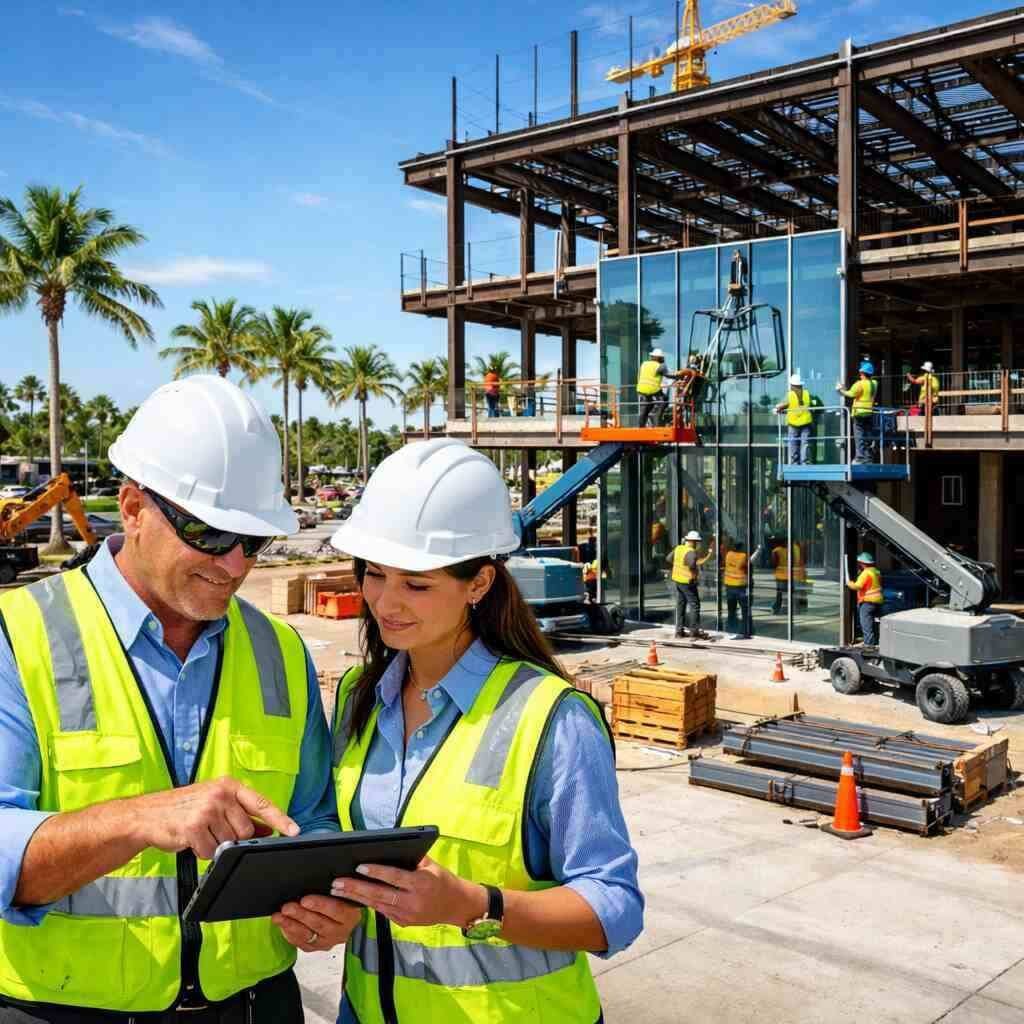
Gone are the days of relying solely on weekly written reports to understand project status. Modern construction technology tools provide real-time visibility into progress. Cloud-based platforms allow for daily photo updates, instant punch list creation, and schedule tracking from any device. Drones can survey site progress and inspect hard-to-reach areas. These tools empower the construction manager and the client with immediate data, enabling faster, fact-based decision-making and ensuring the project stays on its intended path.
5) The Quality and Safety Imperative: Ensuring Assurance and Compliance on Site
Implementing a Multi-Tiered Construction Quality Assurance Program
Quality cannot be inspected into a project at the end; it must be built in from the beginning through a rigorous quality assurance program. This multi-tiered system starts with pre-installation meetings to review standards, includes periodic material and workmanship inspections during installation, and culminates in systematic final reviews. Using checklists based on project specifications and industry standards ensures consistency. This proactive approach to construction quality assurance identifies and corrects deficiencies early, preventing minor issues from becoming major, costly rework problems that delay project delivery.
Championing a Culture of Commercial Construction Safety
A safe jobsite is a productive, efficient, and morally sound jobsite. Championing a true culture of commercial construction safety requires unwavering commitment from leadership down to every laborer. This involves comprehensive site-specific safety plans, daily toolbox talks, rigorous equipment inspections, and continuous hazard awareness training. Investing in safety prevents human tragedy, avoids costly work stoppages from incidents, and demonstrates a fundamental respect for the team building your project. It is the absolute cornerstone of responsible and professional construction operations.
Conducting Systematic Inspections for Commercial Tenant Improvements and Renovations
Renovation and tenant improvement projects carry unique challenges, often working within occupied or adjacent spaces and interfacing with existing building systems. Systematic inspections are even more critical in these environments. This includes verifying the condition of existing structures to be built upon, ensuring new tie-ins to old mechanical systems are flawless, and confirming that work complies with current codes, which may differ from when the building was originally constructed. Meticulous inspection protocols protect the integrity of the entire building and ensure the new space performs as intended.
The Critical Link Between Quality Craftsmanship and Project Delivery
Superior craftsmanship is the tangible result of effective quality and safety programs, and it has a direct impact on project delivery. High-quality work performed correctly the first time prevents callbacks, reduces punch list items, and facilitates smoother final inspections. It also contributes to the long-term durability and performance of the building, enhancing its value. The commitment to quality craftsmanship, therefore, is not just an aesthetic concern but a fundamental component of delivering a project on time, within budget, and to the complete satisfaction of the client.
6) The Communication Nexus: Fostering Collaboration Through Proactive Stakeholder Management
Designing and Executing a Master Construction Communication Plan
The master construction communication plan is the central nervous system of the project. It deliberately outlines what information will be communicated, who will receive it, how it will be delivered, and how often. This plan covers routine updates like weekly owner-architect-contractor meetings, as well as protocols for urgent issues. It defines the reporting structure, ensuring decisions flow efficiently to the right people. A well-executed plan prevents information silos, reduces confusion, and keeps all parties-from investors to end-users-informed and engaged throughout the construction journey.
Managing Expectations from Groundbreaking to Commercial Closeout Process
Clear, consistent communication is the primary tool for managing stakeholder expectations. This means providing honest assessments of progress, openly discussing challenges as they arise, and celebrating milestones achieved. Proactively communicating potential impacts to schedule or budget allows stakeholders to process information and participate in solution-finding. This transparent approach builds trust and partnership, ensuring that everyone’s vision for the final product remains aligned from the first excavation to the final walkthrough during the commercial closeout process.
Leveraging Digital Tools for Transparent Stakeholder Management
Technology has revolutionized stakeholder engagement. Dedicated project portals give clients 24/7 access to schedules, budget reports, drawings, and photo logs. Automated notification systems can alert teams to newly issued documents or approved change orders. These digital tools for stakeholder management create an unprecedented level of transparency and accessibility. They empower clients to be informed participants without needing to be physically present on-site, fostering a collaborative partnership built on shared information.
Turning Challenges into Opportunities with Strategic Dialogue
In complex commercial projects, challenges are inevitable. The differentiator between a good and a great project outcome is how those challenges are communicated and managed. Strategic dialogue involves presenting problems alongside analyzed solutions, facilitating collaborative problem-solving sessions. This approach transforms potential points of conflict into opportunities for innovation and strengthened team relationships. By focusing on “how we solve this” rather than “who is to blame,” proactive communication becomes the engine for overcoming obstacles and driving the project forward.
7) The Final Mile: Executing a Flawless Commercial Closeout and Project Delivery
Streamlining Punch Lists and Final Inspections for Timely Occupancy
The closeout phase demands the same intensity as the initial build to ensure timely occupancy. A streamlined process begins with generating a preliminary punch list well before substantial completion, allowing subcontractors to address items proactively. Final inspections with building officials should be scheduled and prepared for meticulously, with all necessary documentation readily available. An organized, aggressive approach to this phase prevents the frustrating delays that can occur at the finish line, getting your business open or your tenants moved in as scheduled.
Mastering the Documentation and Systems Handover for Commercial Project Delivery
The physical building is only one part of the delivery; the other is the comprehensive package of information needed to operate it. This includes as-built drawings, product manuals and warranties, maintenance schedules, and system operating instructions. Mastering this documentation handover is a critical component of professional commercial project delivery. A well-organized turnover package, often delivered in both physical and digital formats, provides the owner with everything needed for long-term facility management, protecting the value of the investment.
Building Long-Term Value Through Post-Construction Support and Relationships
The relationship with your contractor should not end at the certificate of occupancy. True partners offer post-construction support, assisting with warranty item coordination and being available for consultation. This commitment to long-term relationships turns a single project transaction into a valued partnership for future needs. It reflects a contractor’s confidence in their work and their genuine dedication to client satisfaction, ensuring you have expert support as you begin the operational life of your new or renovated commercial space.
Evaluating Project Success to Refine Future Construction Management Processes
After project completion, a formal evaluation is a powerful tool for continuous improvement. This involves analyzing what went well, what could have been done better, and how processes can be refined for future projects. Reviewing performance against the original goals of budget, schedule, quality, and safety provides concrete data. This lessons-learned approach refines a construction company’s methodologies, ensuring that each project benefits from the experiences of the last, driving ever-higher standards in construction management processes.
Conclusion: Building Your Legacy with Expert Commercial Construction Management
Synthesizing the Seven Pillars for Unmatched Project Success
The journey of commercial construction is complex, but it can be mastered by synthesizing these seven pillars of expert management. From meticulous pre-construction planning to flawless closeout, each phase interlocks to form a robust structure for success. This holistic approach balances financial acumen with operational precision, and quality assurance with proactive communication. When these disciplines are executed in concert, they transform the inherent risks of construction into a predictable, controlled process that delivers exceptional value and a built asset that stands as a testament to thoughtful execution.
Why Partnering with a South Florida Commercial Contractor Like RENOVA Makes the Difference
In the competitive and nuanced South Florida market, local expertise is your greatest asset. Partnering with a seasoned commercial contractor like RENOVA means gaining a team deeply familiar with the specific demands of building in Delray Beach, Boca Raton, West Palm Beach, and throughout Palm Beach County. This local knowledge, combined with a steadfast dedication to the principles outlined here, makes the critical difference between a stressful project and a successful partnership. It ensures your vision is realized with quality craftsmanship, timeliness, and the exceptional service this region deserves.
Taking the Next Step on Your Commercial Renovation or New Construction Journey
Your commercial property is more than an address; it’s the platform for your business’s future growth and success. The journey to create or transform that space begins with choosing the right partner. We invite you to leverage our experience and dedicated process for your next project. Contact RENOVA today for a comprehensive consultation and discover how our commitment to excellence in commercial construction project management can bring your vision to life, on budget and on schedule. Let’s build your legacy together.
Frequently Asked Questions
Question: How does RENOVA implement the commercial construction project management tips, like strategic budget management, discussed in your ‘Top 7 Commercial Construction Project Management Tips’ blog?
Answer: At RENOVA, our construction management process is built on the very principles outlined in our blog. For strategic budget management and cost control, we begin with dynamic budgeting that includes realistic construction contingency planning based on our thorough South Florida site analysis. We employ proactive commercial construction cost control measures using advanced software for real-time tracking, and our construction managers act as dedicated financial stewards. We provide transparent forecasting and reporting, giving you complete confidence. This disciplined approach to budget management, combined with our local expertise in Palm Beach County, ensures your commercial project in Delray Beach, Boca Raton, or West Palm Beach is delivered with financial integrity and maximizes your investment value.
Question: Why is pre-construction planning and due diligence so critical for a commercial construction project in South Florida?
Answer: Pre-construction planning is the absolute keystone of a successful project, especially in the complex South Florida commercial construction landscape. At RENOVA, we conduct exhaustive due diligence, including comprehensive site analysis of soil, topography, and utilities, and verify all local zoning and building code compliance specifics for Palm Beach County. This phase allows us to identify potential risks early, develop an ironclad commercial construction bid process to secure the best partners, and integrate value engineering and sustainable design from day one. By mastering this foundational phase, we prevent costly surprises and delays, setting a clear path for your commercial renovation or new construction from the very start.
Question: How does RENOVA handle subcontractor coordination and scheduling to keep a commercial project on timeline?
Answer: Flawless subcontractor coordination is a core strength of our construction company. We build a resilient commercial construction timeline that accounts for dependencies and South Florida’s unique conditions. Our team employs advanced coordination techniques, including detailed look-ahead schedules and regular trade meetings, to ensure perfect sequencing-so electricians aren’t waiting for framers. We also adopt lean construction methods to eliminate waste and delay on site. Leveraging construction technology tools, we provide real-time progress tracking to all stakeholders. This operational precision ensures your commercial tenant improvements or new build in Delray Beach or Boynton Beach progresses efficiently, safeguarding your commercial project delivery date.
Question: What sets RENOVA apart in ensuring quality and safety on a commercial construction site?
Answer: Quality and safety are non-negotiable imperatives at RENOVA. We implement a multi-tiered construction quality assurance program with systematic inspections from pre-installation meetings to final reviews, ensuring every detail of your commercial tenant improvements meets the highest standards. We champion a true culture of commercial construction safety through site-specific plans, daily training, and rigorous protocols, protecting your investment and our team. This critical link between quality craftsmanship and proactive safety management results in superior project delivery, minimizes rework, and ensures a smooth commercial closeout process. As your licensed general contractor in South Florida, our commitment to these principles builds lasting value and trust.
Question: As a commercial building contractor, how does RENOVA manage communication and stakeholder expectations throughout a project?
Answer: Proactive communication is the nexus of our stakeholder management approach. We design and execute a master construction communication plan from day one, defining protocols for updates, decisions, and issue escalation. We leverage digital project portals to provide you with transparent, 24/7 access to schedules, documents, and budgets, fostering collaboration. Our team is dedicated to managing expectations with honesty, from groundbreaking through the commercial closeout process, turning challenges into opportunities through strategic dialogue. This commitment to clear, consistent communication ensures you are an informed partner, building a long-term relationship based on trust and exceptional customer service.