A considered approach to the home you love.Illustrative home-protection study
BEFORE THE FIRST DAY
Good work starts with a considered plan.
Every home calls for its own conversation. Start with what stays, where the work happens, and how the two will meet.
HOME / PROTECTION STUDYA—01
Every line leads back to home.
Protect what stays
Illustrative plan. Protection and access arrangements are specific to each project.
THE THINGS THAT STAY
Begin with what matters.
Walk through the home with the project team. Identify the floors, finishes, furnishings and personal pieces that need protection or a temporary home.
Agree together What stays, what moves, and who takes care of it.
A CLEAR BOUNDARY
Give the work its own space.
Discuss work-zone boundaries, delivery routes, material storage and separation from the parts of the home still in use.
Agree together Access, protection and the arrangements for each phase.
THE LIFE AROUND IT
Make room for everyday.
Kitchens, bathrooms, school mornings, pets and working from home all belong in the planning conversation. Establish which routines can continue and when other arrangements may be needed.
Agree together Occupancy, essential services and how changes are shared.
THE QUIET DETAILS
Care is something you can see.
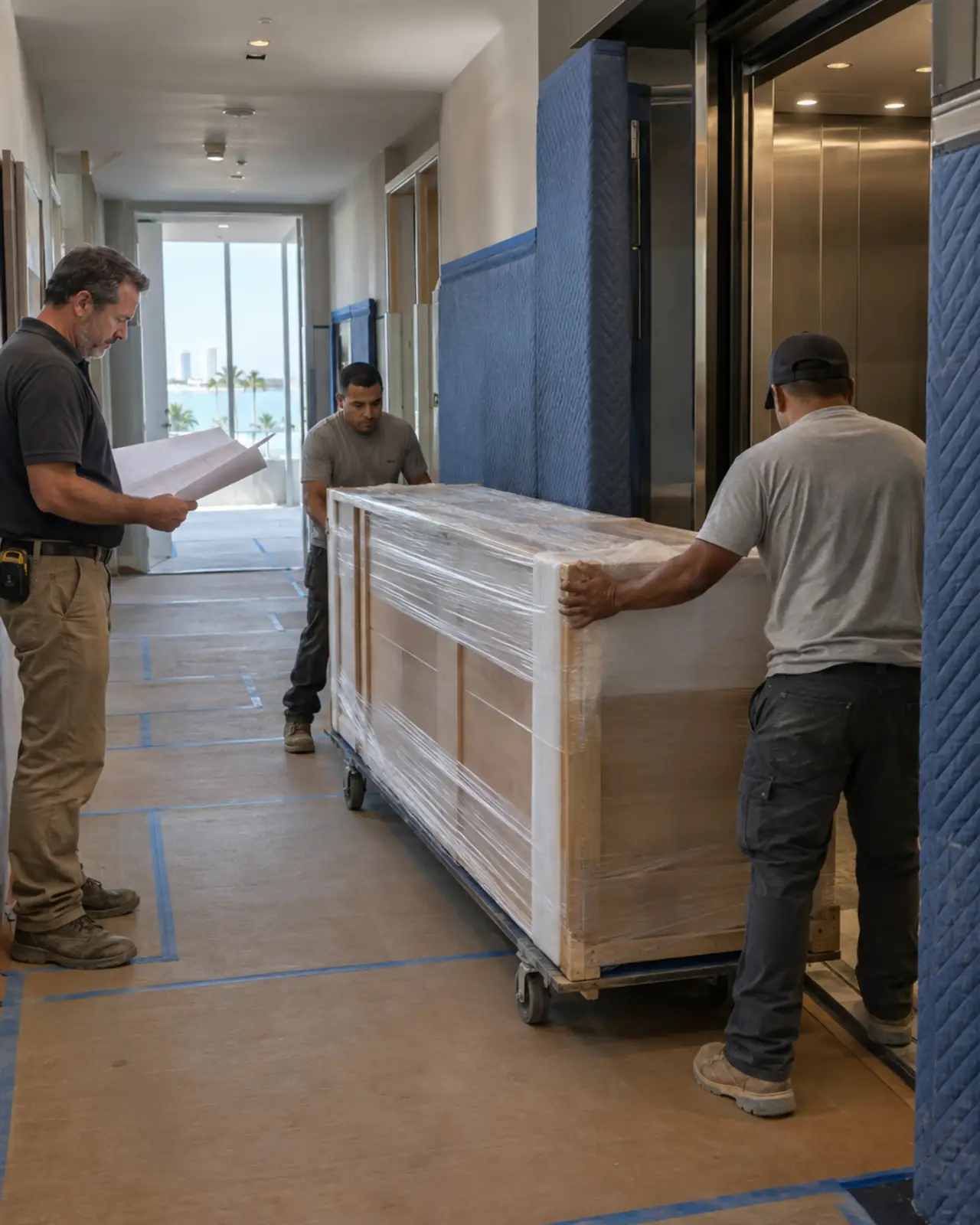
Consider the entire journey.Illustrative delivery study / routes & protected stairs
SURFACES & BELONGINGS
The finish matters. So does what surrounds it.
Discuss suitable protection for the surfaces that remain, including the route materials take through the home. Make a plan for artwork, electronics and valuables before the space becomes a work area.
DUST & EXISTING MATERIALS
Think beyond what’s visible.
Ask how dust-producing work, separation, ventilation and cleanup will be addressed. Share the age of the home and known material concerns before work begins.
The protection measures, responsibilities and cleanup included in your project should be set out in the agreed scope.
YOUR HOME, YOUR ROUTINE
A renovation. And a life to live.
Planning around a home means planning around the people who use it.
Staying at home
Discuss access to essential rooms and services, quiet hours and any stages that may require temporary accommodation.
Children & pets
Plan secure separation from active work, tools and materials. Talk through entry arrangements and daily routines before work begins.
Shared buildings
Bring condo rules, delivery hours, elevator reservations and common-area protection into the conversation early.
The details that make a house yours.HOME, THROUGH EVERY STAGE
A SMALL CONVERSATION. A CLEARER START.
Know the plan. Know who to call.
Before the first day, agree on a primary contact, how updates will reach you and the best way to raise a concern.
Discuss the end-of-day arrangements too: access routes, stored materials, debris removal and protection checks. At handover, review the agreed work, remaining items and care information together.
Practical things to discuss before the work begins.
Can I stay at home while the work is underway?
That depends on the scope, work phases, access and essential services. Discuss which spaces can remain in use and whether any stage calls for temporary accommodation. A protection plan does not, by itself, mean a home is suitable to occupy throughout construction.
What should I move before the first day?
Review furniture, artwork, electronics, valuables and anything along the delivery route. Agree who will relocate each item, where it will be stored, and which surfaces and belongings are included in the protection scope.
Can you promise a dust-free renovation?
No. Renovation can generate dust. Discuss separation of work areas, dust-producing activities, ventilation and cleanup with the project team. The measures should suit the materials, the work and the people using the home.
How should we plan for children and pets?
Keep children and pets away from active construction, stored materials and tools. Discuss secure separation, entry arrangements and daily routines with the project team before deciding whether staying at home is appropriate.
What changes when the project is in a condominium?
Include the property manager or association early. Confirm working hours, deliveries, elevator reservations and protection of common areas, together with the responsibilities in your project agreement.
What if our home has older paint or materials?
Share the age of the home and any known material concerns before work begins. EPA recommends lead-safe certified contractors for work that disturbs paint in pre-1978 homes. Confirm any assessment and specialist responsibilities before materials are disturbed.
What should we agree about daily cleanup and handover?
Clarify debris removal, the condition of access routes, protection checks and how concerns will be reported. For handover, agree the walkthrough, remaining items, care information and the cleaning included in the project scope.
DELRAY BEACH / PALM BEACH COUNTY
Tell us what makes it home.
Based in Delray Beach, RENOVA serves homeowners throughout Palm Beach County, including Boca Raton and Boynton Beach. Let’s talk about your plans—and the details you want considered along the way.