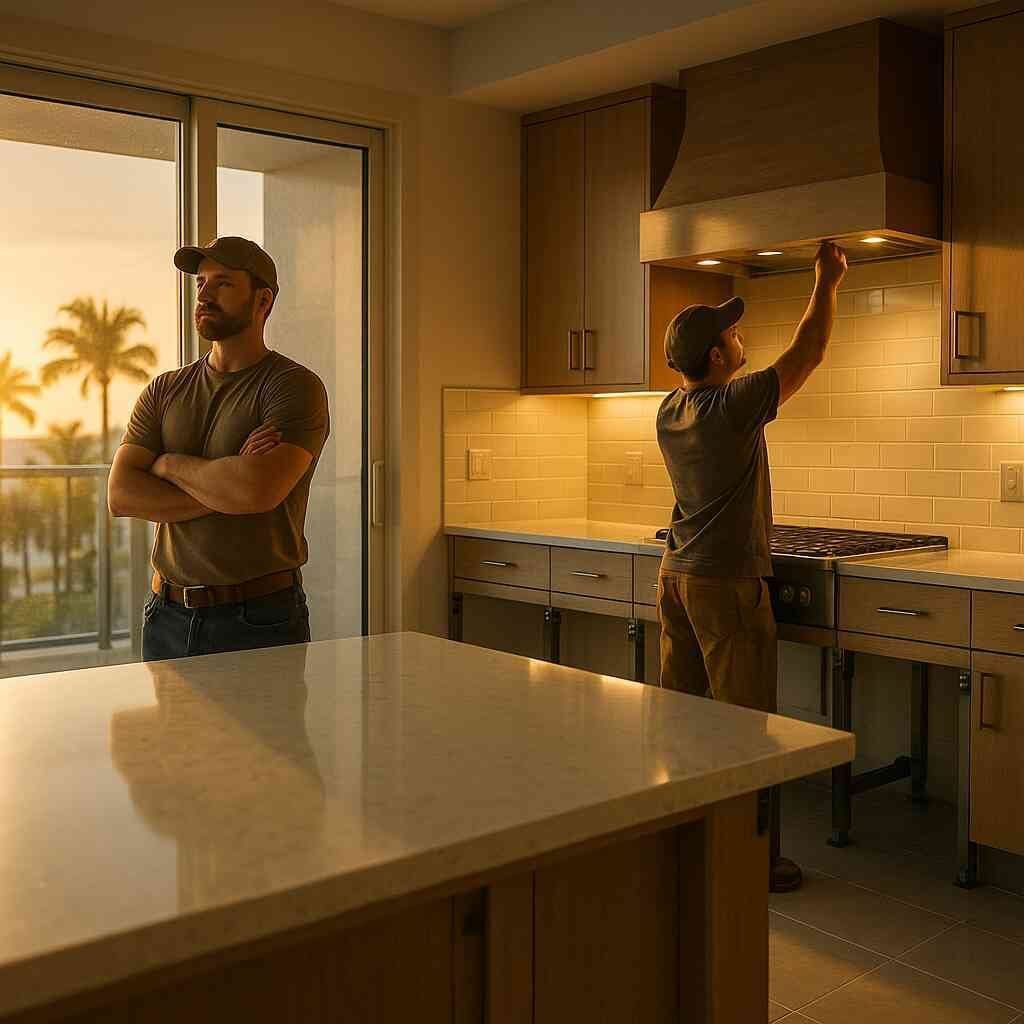
Blueprint Beginnings Setting the Stage for Code Confident Kitchens
Why a licensed general contractor is your first permit tool
Every successful kitchen renovation in West Palm Beach starts with a seasoned, licensed general contractor who understands both the letter and spirit of Palm Beach County building code compliance. At RENOVA, our approach involves convening the architect, interior designer, and construction manager around the same table from day one, ensuring that structural, mechanical, and aesthetic decisions align with local statutes. Because codes evolve quickly in South Florida coastal builds, we review the latest bulletins before drawing a single line. This proactive stance eliminates costly redesigns, accelerates the kitchen permit timeline near me, and keeps neighbors-and inspectors-happy. Homeowners gain peace of mind knowing that their permit set already anticipates reviewer questions rather than merely reacting to them.
Your first permit submission also dictates your entire inspection cadence, so we methodically map electrical rough-ins, GFCI outlet requirements for kitchen renovation, hurricane-rated kitchen cabinetry installation, and ADA-compliant kitchen layout South Florida parameters into one cohesive binder. By letting the code drive the design instead of vice versa, you avoid mid-project change orders that stall progress. When you engage a licensed general contractor near me for kitchen permits, you inherit a network of trusted plan reviewers, structural engineers, and trade partners who already speak the same regulatory language. That shared fluency speeds clarifications, shortens revision cycles, and ultimately positions your culinary space for first-round approvals.
Reading the Palm Beach County inspection road map
Navigating the layered inspection sequence can feel daunting, but breaking it into milestones makes the process transparent. RENOVA begins by presenting clients with a visual road map that marks every inspection gate: foundation, rough plumbing, rough electrical, insulation, drywall, waterproofing, and final. Each phase has its own checklist derived from West Palm Beach kitchen permit guidelines, ensuring nothing falls through the cracks. Because coastal wind-mitigation standards are stricter here than in many regions, our engineers pre-calculate shear values and anchor schedules, confirming that your cabinetry and quartz surfaces will remain secure during 150-mph gust scenarios.
Communication is equally critical. We schedule inspector walk-throughs strategically, grouping trades so that plumbing, electrical, and mechanical approvals land on the same day whenever possible. This tactic saves you permit fees and compresses downtime. When questions arise about duplex receptacle spacing or kitchen exhaust hood CFM code calculations, our field superintendent produces marked-up plans and code excerpts on the spot, preventing costly re-inspections. Clients appreciate these efficiencies almost as much as our West Palm Beach renovation permitting assistance service, which tracks every submittal and reminds you when fee payments or affidavits are due.
RENOVA kitchen remodel code checklist overview
Even veteran homeowners are surprised by the sheer volume of boxes that must be checked before a single cabinet can be hung. To streamline the journey, RENOVA maintains a living kitchen remodel code checklist tailored to residential and commercial projects alike. It begins with site-specific wind-load calculations, migrates through energy-efficient appliance code upgrades, and finishes with green building code integration in Palm Beach County kitchens. The document translates dense regulatory language into everyday action items, such as verifying that ice maker boxes include backflow prevention devices or confirming that under-cabinet LED lighting meets low-voltage transformer clearance rules.
Our checklist also cross-references inspection timing, so waterproofing membranes under tile floors are photographed and signed off before the mud bed cures. This granular level of construction management supports first-pass approvals and keeps subcontractors accountable. Because most kitchens today integrate smart panels, EV chargers, and touchless fixtures, our scheduler aligns electrical, plumbing, and technology trades in a tight, no-excuses sequence. For owners who want to see how each step will unfold, we share Gantt charts through cloud-based portals and update them in real time. Clients who choose RENOVA for construction management for multi-stage kitchen inspections () routinely report smoother builds, fewer surprises, and on-time grand openings of their new culinary hubs.
1) Clearance Mastery GFCI Outlet Placement for Dry and Wet Zones
Duplex receptacle spacing that passes first-round inspection
Palm Beach County inspectors start measuring receptacle spacing the moment they enter. The duplex receptacle spacing code in South Florida demands outlets every four feet along countertops. No break longer than twenty inches escapes correction. RENOVA overlays this grid onto cabinetry elevations, ensuring symmetry and ample future appliance flexibility. Because drawings include height, depth, and splash details, inspectors see intent immediately and rarely flag questions.
Our field team pre-drills boxes based on chalked centerlines, which keeps drywall crews honest. During rough inspection, circuits are already labeled and stapled per the NEC securing rules. That tidy presentation builds confidence and encourages same-day approval. If an unexpected obstruction appears, the superintendent uses laser rangefinders to show that outlet-to-corner distances still comply. This proactive storytelling converts reviewers into allies rather than adversaries.
Island outlets and custom cabinetry coordination
Islands introduce unique challenges because backsplashes disappear. The custom kitchen island electrical code requires at least one GFCI outlet on each accessible side. RENOVA’s cabinetmaker routes hidden chase cavities so wires travel without compromising drawer space. We model toe kick cutouts in 3D, enabling electricians to mark precise hole locations before panels leave the shop. Consequently, finished cabinetry arrives outlet-ready, avoiding retrofits that damage finishes.
During design reviews, homeowners view earlier code-compliant kitchen makeovers in Palm Beach County that illustrate best practices. Those visuals clarify why inspector access windows must remain unobstructed. We then schedule the island rough inspection alongside plumbing to minimize site visits. By bundling checks, we compress downtime and maintain flooring sequences. Clients appreciate how this coordination protects both their timeline and investment.
Boynton Beach remodelers’ tips for countertop edge distances
Countertop edge distance affects both safety and aesthetics. Boynton Beach remodelers’ electrical compliance teams recommend outlets no closer than twelve inches from a waterfall edge. That spacing prevents cord strain and reduces splash exposure during cleanup. RENOVA verifies dimensions with digital calipers after stone templating, ensuring the fabrication shop receives exact cutout coordinates. The result is a seamless slab without last-minute grinder noise during final inspection.
Edge considerations extend to seating zones as well. Overhangs hosting stools still require reachable GFCI protection, yet no cords should dangle near knees. We therefore mount pop-up receptacles flush with quartz, allowing safe access without visual clutter. These devices carry UL listings and satisfy GFCI outlet requirements for kitchen renovation when wired to the dedicated small-appliance circuit. Inspectors routinely applaud the clean look and pass the installation on first glance.
Smart kitchen technology power needs and code overlap
Voice assistants, induction ranges, and touchless faucets draw more circuits than older kitchens ever imagined. Our smart kitchen technology compliance regulations workflow begins with a load schedule that anticipates tomorrow’s gadgets. We allocate separate homes for charging drawers, under-cabinet LED drivers, and network hubs. Each branch connects to arc-fault and GFCI breakers as required, preventing classification confusion during inspection. This clarity keeps the panel neat and the homeowner future-ready.
Energy monitoring now intertwines with life-safety considerations. When we install whole-home surge protection, we document the serial number on permit drawings, smoothing approval. Open-protocol smart panels even email inspector signatures to the building department in real time. Such transparency demonstrates RENOVA’s mastery of evolving electrical codes and secures trust instantly. Consequently, clients avoid surprise upgrades when they add EV chargers or rooftop solar later.
2) Ventilation Vortex Calculating the Perfect Hood CFM
Florida residential kitchen ventilation standards simplified
Florida residential kitchen ventilation standards simplified begin with understanding cubic‐feet‐per‐minute targets rather than memorizing code chapters. Inspectors want proof that your hood captures grease, steam, and combustion by-products before they migrate. RENOVA’s engineers use formulae tying range width, burner type, and room volume to required airflow. That calculation appears on every permit drawing, eliminating guesswork during plan review. Homeowners see the logic, and reviewers appreciate the transparency powered by our RENOVA design-build expertise for coastal kitchens.
Once the baseline CFM is known, we select quiet, energy-efficient blowers that satisfy kitchen exhaust hood CFM code calculations without over‐ventilating. Oversizing wastes energy and can depressurize a tight home. Undersizing triggers immediate red tags. We balance supply and exhaust by integrating dedicated make-up air dampers, ensuring compliance with West Palm Beach kitchen permit guidelines. Every component arrives labeled, so inspectors can confirm ratings quickly and approve the rough-in on the first visit.
Coastal wind pressures and make-up air solutions
South Florida’s coastal wind pressures demand stronger backdraft dampers and tighter duct joints than inland builds. During hurricanes, gusts can reverse airflow and flood ducts with salt spray. RENOVA pre-tests hoods on variable-speed settings, confirming they maintain negative pressure even during forty-knot bursts. Our designers also position intake louvers away from prevailing winds, reducing salt accumulation and extending motor life.
Balanced ventilation requires tempering the incoming air, so conditioned interiors stay comfortable. We specify inline heaters that warm replacement air before it reaches the grille, preventing condensation on stainless surfaces. Because building scientists link uncontrolled infiltration to mold, RENOVA integrates programmable dampers tied to range activation. For deeper resilience, clients exploring Delray Beach remodeling strategies for hurricane zones often add battery-backed controllers that keep hoods operating when grid power falters.
Fire suppression sensor integration above induction and gas ranges
Modern codes increasingly reference fire suppression code insights for home kitchens, especially when commercial-style ranges appear in residences. RENOVA embeds heat and flame sensors within custom wood canopies, connecting them to concealed canisters of food-grade suppressant. The system releases only when temperatures exceed threshold values, protecting cabinetry without drenching sauté pans unnecessarily. This discrete setup satisfies both safety criteria and aesthetic expectations.
Sensor wiring runs alongside low-voltage lighting cables but remains isolated in a dedicated conduit for clarity during inspection. We demonstrate functionality by simulating thermal spikes, printing timestamps for the field inspector’s file. Integrating technology within defined functional zones aligns with recognized functional zones and ventilation standards in the kitchen, reinforcing RENOVA’s commitment to evidence-based design. Homeowners gain peace of mind, and the building department records another code-compliant, future-ready culinary space.
3) Barrier Wisdom Moisture Protection Under Every Tile
Choosing membranes that satisfy the hurricane rated flooring code
South Florida kitchens endure hydrostatic pressure, driving rain, and slab movement during tropical storms. RENOVA therefore selects sheet or liquid membranes that meet both the hurricane rated flooring code and the strict moisture barrier requirements under tile floors. These products carry ANSI A118 certifications, resist wind-borne debris impact, and remain flexible after curing. Our construction manager reviews pull-strength data, ensuring the membrane will not shear when cabinets and islands vibrate under 150-mph gusts. By documenting these calculations on the permit set, we can plan reviewers before demolition even begins.
Installation technique matters as much as product choice. We pre-fill slab cracks with epoxy, then roll a primer that heightens adhesion between concrete and membrane. After curing, seams are heat-welded or overlapped per manufacturer guidelines, creating a continuous waterproof plane. Moisture meters verify slab humidity below four percent prior to thin-set application. This disciplined approach prevents telegraphing and earns quick approval during the initial waterproofing inspection.
Specifying thin-set with low VOC finishes for indoor air quality
Tile assemblies only succeed when the adhesive respects both strength and health. RENOVA specifies polymer-modified thin-sets rated for porcelain panels and low pourous stones, yet emitting near-zero volatile organic compounds. The mixture complies with South Florida energy-efficient appliance code upgrades by supporting radiant heating mats without off-gassing. Because our selections align with green building code integration in Palm Beach County kitchens, homeowners enjoy cleaner air during and after construction. Inspectors also appreciate the printed VOC certificates contained in the jobsite binder.
The finish layer receives equal scrutiny. We topcoat grout lines with antimicrobial sealers that repel citrus acids common in coastal cuisine. These coatings pass ASTM mildew tests and match the low-VOC finishes for the code-compliant kitchens mandate. RENOVA’s interior designer coordinates grout color with quartz veining, ensuring style never compromises compliance. Once curing completes, air scrubbers record safe particulate levels, providing measurable proof of indoor air quality success.
Inspection timing for waterproofing sign-off in West Palm Beach
Timing the inspector is an art that keeps projects on schedule. RENOVA requests the waterproofing inspection immediately after the membrane passes a 24-hour flood test, but before the thin-set is mixed. This window gives officials clear visibility of seams, flashings, and drain collars without demolition. We photograph gauges showing static water pressure holding steady, then upload images to the county portal to accelerate approval.
Coordination continues on site. Our superintendent synchronizes plumbing rough-in verification with the same visit, reducing permit fees and downtime. He provides the RENOVA kitchen inspection preparation checklist so the officer can check itemized tasks quickly. Because every box is pre-initialed by trades, the meeting rarely exceeds ten minutes. Dry-in clearance follows, releasing flooring installers to set tile confidently the very next morning.
 4) Hurricane Armor Coastal Windows and Anchored Cabinetry
 4) Hurricane Armor Coastal Windows and Anchored Cabinetry
Impact glazing in kitchen bays and pass-throughs
Coastal wind-mitigation kitchen windows are the first defense against airborne debris during tropical storms. RENOVA specifies laminated, low-e impact glass that meets West Palm Beach kitchen permit guidelines without compromising daylight. Because inspectors need clear documentation, our drawings include pressure charts for every bay and pass-through opening. Homeowners also see performance data comparing uplift resistance across frame materials, which builds trust quickly. When clients explore custom coastal homes with impact-rated kitchens in South Florida, they immediately recognize how rigorous testing translates into everyday resilience.
Palm Beach County building code compliance requires more than glazing thickness; mullion spacing and anchorage patterns must also resist 150-mph gust loads. Our licensed general contractor reviews engineered shop drawings before production, ensuring each fastener aligns with the substrate type. During inspection, pre-drilled pilot holes and stainless screws demonstrate craftsmanship and accelerate approval. Additionally, concealed weep systems relieve water pressure, preventing interior damage even if seals momentarily flex. These layered safeguards keep culinary spaces bright, safe, and storm-ready year after year.
Cabinet fastening schedules for 150-mph gust zones
Many homeowners forget that upper cabinets behave like sails when winds infiltrate broken fenestration. RENOVA combats this threat with hurricane-rated kitchen cabinetry installation protocols developed through years of coastal projects. We mandate twelve-gauge screws into solid blocking, spaced no more than eight inches on center along the top rail. Moreover, continuous cleats distribute loads evenly, reducing point stress that could split plywood backs. Every fastening schedule appears in our RENOVA kitchen remodel code checklist so field teams remain accountable.
Construction management efficiency matters here, too. Our superintendent coordinates cabinet delivery only after wall sheathing inspections close, avoiding premature installation that could void warranties. Before hanging begins, laser levels mark datum lines, guaranteeing plumb alignment even when walls bow slightly. Because finish nails alone will never satisfy Palm Beach reviewers, inspectors appreciate seeing structural screws tagged with torque readings. These steps showcase why discerning clients label RENOVA among the best contractors for code-compliant kitchens in South Florida.
Load path continuity between soffits and truss chords
Kitchen soffits often conceal ductwork and lighting, yet they also serve as critical links in the home’s lateral load path. RENOVA designs plywood-backed soffits that tie directly into truss chords using hurricane clips rated for uplift and shear. This strategy transfers cabinet and ceiling loads into the roof structure, preventing separation during extreme pressure shifts. Our engineers model these forces in BIM software, verifying that deflection stays within one-three hundred-and-sixtieth of a span.
Field crews execute the plan with meticulous precision. They pre-drill metal straps, then tighten Simpson screws to manufacturer-specified torque, logging values in the daily report. Inspectors can trace the entire structural chain-from countertop brackets through soffit framing to anchor bolts-without opening finished surfaces. Because this transparency eliminates guesswork, approvals arrive swiftly, and re-work becomes unnecessary. Ultimately, continuous load paths ensure the kitchen remains operational and beautiful even after the fiercest coastal storms.
5) ADA Flow Universal Design for All Abilities
Minimum aisle widths in peninsula layouts
Peninsula kitchens tempt designers to pinch space, yet ADA principles never compromise. RENOVA targets a clear 44-inch aisle as the sweet spot between cabinetry runs. That dimension exceeds the baseline 40 inches that many codes allow, fostering wheelchair turns without scuffing panels. Our licensed general contractor West Palm Beach team verifies the width with laser distance meters before framing begins. By confirming tolerances early, we avoid drywall adjustments that delay finish trades and inspection dates.
Aisle planning also considers appliance swing arcs. We model refrigerator and dishwasher doors in BIM, guaranteeing they open fully without blocking the path. When a client requests a wine fridge, we simulate bottle retrieval from seated positions. These digital rehearsals illustrate how an ADA-compliant kitchen layout in South Florida can look stunning yet remain practical. Inspectors appreciate the data, and homeowners enjoy effortless circulation during gatherings.
Counter height variations that keep style and compliance
Universal design thrives on varied working planes, so RENOVA integrates multi-level counters into every inclusive peninsula. Standard prep zones sit at 34 inches, accommodating seated cooks and standing chefs alike. Adjacent raised bars reach 42 inches, creating visual hierarchy while shielding prep clutter. We fabricate waterfall quartz returns that transition smoothly between levels, eliminating sharp edges and easing cleaning. Structural steel supports hide inside cabinetry, preserving sleek lines without sacrificing strength.
Our interior designer pairs these heights with contrasting materials that help visually impaired users identify zones. Light quartz meets darker recycled glass, offering a tactile cue alongside a visual accent. Pull-out shelves beneath the lower counter extend storage within easy reach. Soft-close hardware prevents slam injuries and satisfies low-VOC finishes for code-compliant kitchens. Every detail turns accessibility into an aesthetic advantage rather than an afterthought.
Touchless fixtures and energy code synergy
Motion-activated faucets serve more than convenience; they fulfill hygiene goals and support energy-efficient appliance code upgrades. RENOVA specifies models with adjustable flow rates, trimming water use without compromising rinse power. Coupled with insulated supply lines, the faucets maintain temperature longer, reducing heater cycles. Voice-controlled lighting joins the ecosystem, letting users adjust brightness without manual switches. These layers of automation dovetail with smart kitchen technology compliance regulations, satisfying both ADA and energy mandates.
Cross-disciplinary coordination secures faster approvals. Our electricians place GFCI-protected outlets within 15 inches of touchless control modules, simplifying maintenance while meeting LED under-cabinet lighting code standards. The plumber and the electrician sign a shared checklist before rough inspection, preventing re-work. Clients exploring Boynton Beach renovation services for ADA kitchens see prototypes in our showroom, experiencing hands-free cooking firsthand. By merging accessibility with conservation, RENOVA delivers kitchens that respect every resident and the planet alike.
6) Spark Safety Integrating Fire Suppression and Sprinklers
When Palm Beach County requires residential sprinkler heads
Palm Beach County building code compliance demands residential sprinkler systems in several kitchen scenarios, and homeowners often miss the triggers. Conversions that expand a home’s conditioned area or add a second story immediately cross the threshold. Likewise, a new custom home exceeding size limits set by local ordinances must include sprinklers even if the rest of the county property does not. RENOVA’s licensed general contractor West Palm Beach team confirms the occupancy classification early, preventing shock later. Our interactive portfolio of residential kitchen code upgrades demonstrates how sprinklers integrate seamlessly with coffered ceilings and custom beams.
Many kitchens also require additional heads when ceiling heights exceed typical elevations. The county interprets higher volumes as an increased fuel load, so spray patterns must reach every surface. We calculate throw distance during design, selecting pendant or concealed heads accordingly. Because supply pressures differ between municipal and well systems, we model flow with specialized software. These simulations appear in the permit packet, satisfying reviewers who look for quantifiable fire suppression code insights for home kitchens. Including that data early accelerates plan review and inspection scheduling.
Recessed can lights and clearance to water lines
Lighting adds complexity because fixtures and sprinkler pipes often compete for the same plenum space. Recessed LED cans must stay two inches from CPVC or steel sprinkler mains to avoid heat transfer. RENOVA’s construction management team overlays electrical and plumbing drawings, identifying pinch points before drywall. We reroute low-voltage runs where needed and include protective escutcheons at every penetration. This proactive coordination eliminates field conflicts that could delay residential sprinkler systems Palm Beach kitchens inspections.
Clearance rules also address potential overspray interference. Sprinkler heads must discharge without obstruction, so trims and baffles cannot intersect the defined cone. Our interior designer selects shallow fixtures and positions them outside the spray radius. These placements satisfy the LED under-cabinet lighting code standards while protecting the extinguishing pattern. Inspectors appreciate the clear sightlines and often sign off without comments. Homeowners enjoy even illumination and robust safety, proving aesthetic goals need not compromise compliance.
RENOVA coordination with the fire marshal for same-day signoffs
Obtaining prompt approval hinges on collaborative scheduling. RENOVA contacts the fire marshal as soon as rough piping passes pressure testing, aligning the visit with the framing inspection. We present stamped hydraulic calculations alongside the RENOVA kitchen inspection preparation checklist, allowing quick verification. Because every valve tag matches the documentation, the marshal can compare numbers at a glance. This transparent process frequently yields same-day signoffs, compressing the kitchen renovation permit timeline near me.
Communication continues through the final trim. Our superintendent photographs head placement and sends real-time updates to the authority having jurisdiction. Any minor adjustments occur before painters arrive, preventing costly touch-ups. Once cabinetry is installed, we perform a water-flow alarm test witnessed by both the owner and the official. That demonstration of performance cements trust and fulfills West Palm Beach kitchen permit guidelines in one efficient visit. As a result, clients gain immediate occupancy of their beautifully safeguarded culinary space.
7) Power Smarts Energy Efficient Appliances and Smart Panels
Energy Star selections that meet new construction rebates
Energy-efficient appliance code upgrades start with the right labels, and RENOVA insists on Energy Star certification for every refrigerator, dishwasher, and range. Inspectors appreciate that these models exceed Florida’s stringent performance thresholds, simplifying approval during mechanical sign-off. Because rebate programs change frequently, our construction manager tracks utility incentives and aligns purchase orders with the current cycle, saving homeowners real dollars. We document projected kilowatt reductions in the permit packet, proving tangible gains that satisfy Palm Beach County building code compliance reviewers. This proactive paper trail converts eco-friendly choices into immediate pocketbook wins.
Even luxury clients respect sustainability when design remains uncompromised. Therefore, our interior designer pairs Energy Star wine coolers with custom millwork, ensuring ventilation clearances match manufacturer specifications. Hidden toe-kick grilles maintain airflow without interrupting sightlines, preserving that coveted showroom finish. Meanwhile, smart sensors learn usage patterns and dial back compressors during low-demand hours, reducing grid strain. Those savings dovetail with broader South Florida building code mandates for reduced carbon footprints. Ultimately, thoughtful appliance selection elevates comfort, aesthetics, and compliance in one elegant gesture.
Load calculations for induction cooktops and EV chargers
Induction technology demands heavy amperage, so RENOVA’s electricians perform detailed load calculations before routing a single conduit. We analyze breaker panels, feeder sizes, and voltage drop tolerances, then model simultaneous usage scenarios that include future EV charging stations. This forward-thinking approach aligns with smart kitchen technology compliance regulations and prevents costly service upgrades later. Once calculations validate capacity, we allocate dedicated 50-amp circuits with AFCI and GFCI protection, satisfying NEC and local amendments alike. Inspectors commend the clarity, allowing first-pass electrical approvals.
Homeowners often ask how an induction cooktop coexists with rapid vehicle charging. RENOVA solves the puzzle by staggering demand through intelligent load management modules. These devices monitor real-time amperage and temporarily throttle less critical circuits when peaks occur, ensuring the main breaker never trips. Furthermore, we benchmark our strategy against smart kitchen electrical code comparisons near Boca Raton, demonstrating regional best practices. The result is a kitchen that cooks faster, drives greener, and remains rock-solid under inspector scrutiny.
Whole-home surge protection code advantages
South Florida storms create voltage spikes that can destroy appliances in milliseconds, so whole-home surge protection is no longer optional. Palm Beach County reviewers increasingly flag missing devices, and RENOVA stays ahead by specifying Type 1 protectors at the service entrance. These units absorb lightning-induced surges before they infiltrate sensitive smart panels, safeguarding touchscreen ranges and Wi-Fi refrigerators alike. We record serial numbers on the RENOVA kitchen remodel code checklist, giving inspectors instant verification.
Surge devices also strengthen warranty claims because manufacturers often exclude damage from unprotected electrical events. By documenting installation, homeowners secure their investment and meet evolving insurance underwriting requirements. Additionally, integrated monitoring apps alert users to protector health, aligning with the broader Internet-of-Things ecosystem. This transparency reinforces trust between owner and builder, while satisfying GFCI outlet requirements for kitchen renovation through enhanced safety layers. When the next thunderstorm rolls in, clients rest easy knowing their culinary command center remains fully shielded and code compliant.
8) Structural Shifts Open Concept Wall Removal Done Right
Determining load bearing with laser scanning
Open kitchens feel airy, yet removing walls requires science, not guesswork. RENOVA begins with high-resolution laser scanning that maps every stud, joist, and hidden duct. The scan exports a point cloud directly into our BIM software, revealing structural loads instantly. This data-rich model helps the licensed general contractor in West Palm Beach confirm which walls carry truss weight. By verifying conditions before demolition, we avoid surprises that balloon budgets. Homeowners also see a color-coded report explaining why some sections cannot move without reinforcement. Inspectors appreciate tangible evidence rather than speculative field notes. That transparency earns faster approvals and reduces red tags during framing review.
Laser scanning supports compliance with the load-bearing wall removal permits that Florida authorities demand. RENOVA overlays the scan with shear wall schedules from engineers, proving code alignment before submission. We embed that overlay within our South Florida building code updates decoded for the 2026 kitchens digest, giving reviewers context. Because calculations appear early, plan examiners rarely request additional engineering. That predictability lets homeowners schedule trades with confidence, shortening downtime.
Beam sizing tables for kitchen spans over twelve feet
Once a wall leaves, a properly sized beam must shoulder the load gracefully. RENOVA consults the latest AISC tables, translating steel and LVL options into homeowner-friendly charts. For kitchen spans exceeding twelve feet, laminated veneer lumber often provides strength without bulky profiles. We verify allowable deflection stays below L over 360, protecting quartz seams from micro-cracking. The construction manager then coordinates fabricators, ensuring lead times match demolition milestones.
Beam charts only pass when anchored to credible references on structural behavior. For transparency, we link each selection to recognized structural principles in modern home construction. Inspectors cross-check our tables against the link, instantly validating methodology. Field crews install temporary shoring before saws buzz, keeping families safe during transformation. Afterwards, ultrasonic gauges confirm bolt torque and beam camber, documenting every detail for final inspection.
Permit timeline hacks near me for faster approvals
Even perfect beams cannot progress without a strategic permit path. RENOVA sequences submissions, starting with structural sheets while finish selections evolve in the background. This overlapping technique trims the kitchen renovation permit timeline near me by several critical days. We pre-book inspections through the county portal, selecting early-morning slots to capitalize on fresh reviewer energy. Simultaneously, our admin team tracks fee receipts, preventing clerical holds that stall fieldwork.
We reference the latest 2026 Boca Raton kitchen code breakdown by RENOVA to anticipate reviewer questions. By shipping clarifications before the phone rings, we avoid dreaded review cycles. Our technique pairs voice-of-customer sheets with county checklists, aligning homeowner dreams with regulatory reality. The result is a predictable green-tag parade that maintains subcontractor momentum. Happy inspectors translate into happy neighbors, smoothing every subsequent renovation your block attempts.
9) Water Guardians Plumbing Rough-Ins and Backflow Security
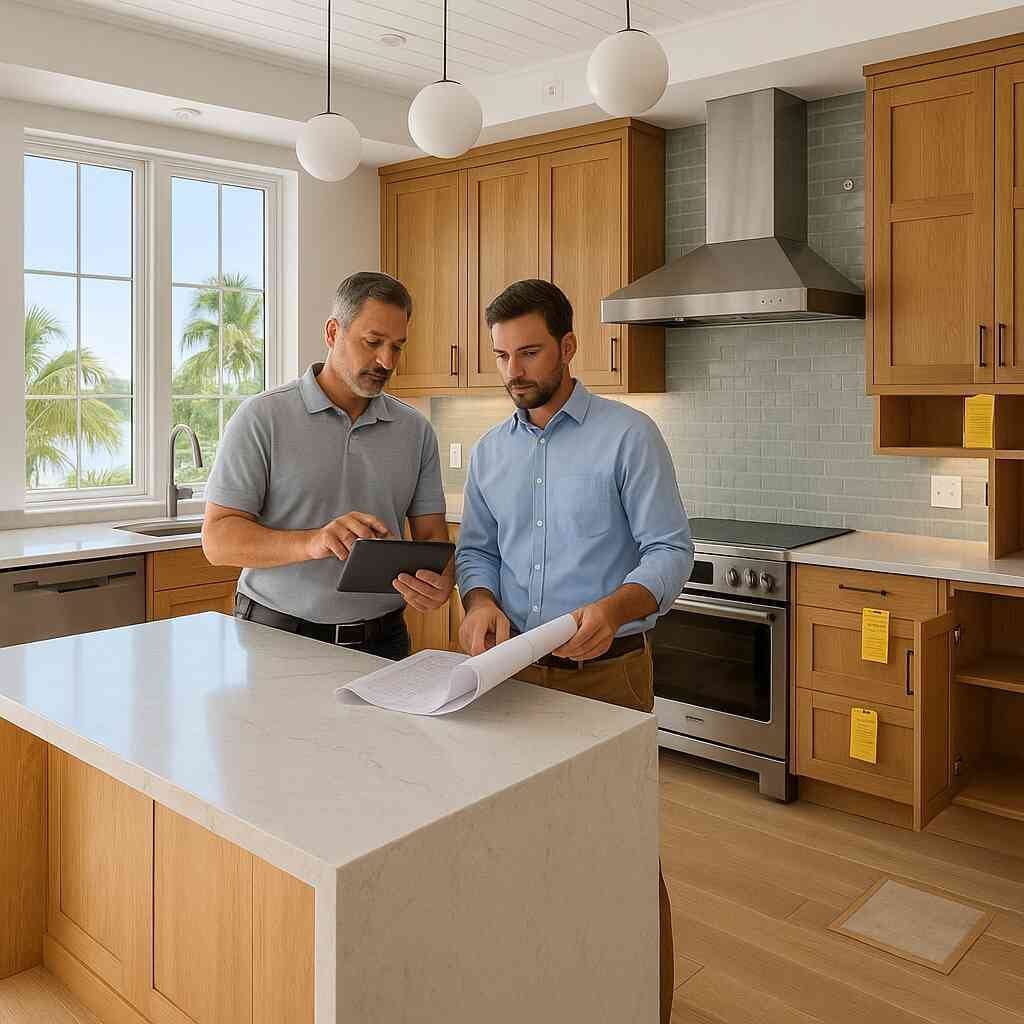 9) Water Guardians Plumbing Rough-Ins and Backflow Security
Trap arm lengths and venting paths that inspectors love
Proper drainage begins with a code-correct trap arm, and RENOVA never assumes existing dimensions are acceptable. Plumbing rough-in code for Delray Beach renovations mandates that trap arms stay within one pipe diameter of the slope. Our plumbers use digital levels to set the precise quarter-inch fall per foot that inspectors expect. They also keep the trap seal depth between two and four inches for odor control. Because we photograph every measurement, reviewers can approve without lengthy site discussions.
Venting mistakes cause most plumbing red tags, so we diagram each vent path inside the BIM model. That transparency shows the role of a general contractor on code-heavy projects and builds instant inspector confidence. We size vent stacks for developed length first, then ensure the roof penetration avoids hurricane uplift zones. Cleanouts remain within five feet of junctions, facilitating camera inspection without cabinet removal. Consequently, the RENOVA kitchen inspection preparation checklist usually earns a green stamp on its first presentation.
Ice maker boxes with built-in dual check valves
Kitchen appliances deserve the same code diligence as sinks. Therefore, we specify ice maker boxes featuring factory-installed dual check valves. This assembly satisfies the backflow prevention device kitchen code requirement without bulky exterior hardware. Stainless supply braided lines attach to quarter-turn valves rated for 125 psi continuous duty. Inspectors test pressure at rough-in, confirming zero bleed-back into potable lines.
Placement matters as much as hardware, so RENOVA centers the box six inches above the finished baseboard. That height keeps connections accessible while preventing kinks behind deep French-door refrigerators. We pre-frame backing plates, allowing drywall crews to create crisp, paint-ready openings. Because identification tags remain visible, the county official logs model numbers without removing covers. This efficiency shortens the kitchen renovation permit timeline near me and delights homeowners eager for ice-cold beverages.
Greywater pre-plumb for future sustainable upgrades
Forward-thinking clients ask how today’s renovation supports tomorrow’s conservation goals. RENOVA answers by pre-plumbing greywater lines from kitchen sinks to capped stubs near the exterior wall. We label these pipes clearly, so future contractors can extend them toward filtration tanks without structural demolition. Separate color coding distinguishes greywater from potable and sanitary branches, preventing accidental cross-connection. This foresight aligns with sustainable kitchen construction management practices prized by Palm Beach County reviewers.
Even though local ordinances do not yet mandate greywater reuse, our layout respects anticipated code evolution. We upsize vents and reserve breaker slots, ensuring pumps and sensors integrate seamlessly later. By delivering this readiness today, RENOVA enhances property value and environmental stewardship simultaneously. Inspectors note the capped line on final documentation, acknowledging our commitment to progressive Palm Beach County building code compliance. Homeowners appreciate the hidden investment every time utility bills arrive leaner than expected.
10) Finish Green Quartz Certification and Sustainable Surfaces
NSF ratings for food contact quartz countertops
Quartz surfaces dominate modern kitchens, yet not every slab satisfies strict health codes. RENOVA specifies products carrying NSF 51 certification, which verifies suitability for direct food contact. This designation aligns with the quartz countertop code certification language that Palm Beach County reviewers cite during finish inspections. By presenting factory test reports inside the RENOVA kitchen remodel code checklist, our construction manager removes uncertainty before counters even arrive on site. Inspectors appreciate the transparency and typically green-tag the installation without hesitation.
Certification alone is not enough; performance must endure coastal stresses. Our Delray Beach fabrication team seals edge profiles using EPA-approved resins that resist citrus acids, sunscreen oils, and saltwater residue. Although invisible, this micro-sealant blocks microbial growth and prevents staining from tropical fruit juice. Homeowners gain confidence knowing their prep zone meets both hygiene and longevity goals. Meanwhile, the licensed general contractor in West Palm Beach oversees strict handling protocols, ensuring slabs stay chip-free from truck to island.
Low VOC cabinet finishes that withstand coastal humidity
Coastal humidity challenges even premium cabinetry, so RENOVA insists on factory finishes emitting under 50 grams per liter of VOCs. These low-VOC finishes for code-compliant kitchens lock moisture out while keeping indoor air fresh. We bake each finish in a controlled oven, creating a molecular bond that resists blistering when sea breezes push dew points upward. During inspections, air-quality readings consistently fall below state thresholds, proving our strategy works. Clients notice the absence of chemical odor on move-in day, reinforcing trust in our process.
Durability still matters, particularly around dishwashers where steam escapes daily. Therefore, we specify catalyzed conversion varnish fortified with marine-grade additives. This formula flexes with wood movement yet refuses to yellow under UV glare. Cabinets remain picture-perfect through countless salt-spray seasons, preserving resale value. When inspectors tap panels with moisture meters, readings stay well within allowable limits, confirming the finish’s protective power.
Recycled glass backsplash options in Delray Beach custom homes
Sustainability goes beyond buzzwords when recycled glass enters the design palette. RENOVA sources backsplash tiles containing up to 85 percent post-consumer bottles, diverting significant waste from Florida landfills. Glass chips receive thermal treatment that fuses pigments permanently, yielding vibrant hues that echo Atlantic sunsets. Because each sheet includes a manufacturer declaration of recycled content, examiners quickly verify compliance with sustainable kitchen construction management practices, saving project time.
Designers often pair these mosaics with layered under-cabinet lighting to highlight the shimmering texture. Our team follows LED under-cabinet lighting code standards, ensuring drivers remain cool behind glass panels. For style inspiration, we share the trend report for Delray Beach kitchen layouts meeting code during planning sessions. Homeowners see tangible examples of eco-friendly elegance, then customize grout colors to complement adjacent quartz. The result is a backsplash that tells a green story while meeting every technical checkpoint.
Construction management practices for waste diversion
Green finishes shine brighter when construction waste stays out of dumpsters. RENOVA’s construction management team starts by separating quartz offcuts, cardboard, and shrink wrap into labeled bins. Certified recyclers then transform stone remnants into future pavers and packaging into fresh fiberboard. These actions fulfill county guidelines and demonstrate a tangible commitment to environmental stewardship. Progress reports list diversion weights, giving owners measurable proof of impact.
Scheduling also supports sustainability. We align countertop templating with cabinet delivery, eliminating duplicate truck trips and related emissions. Material orders consolidate through regional suppliers, reducing carbon output while supporting local economies. Such coordination exemplifies sustainable kitchen construction management practices that inspectors increasingly value. Homeowners appreciate smoother logistics and cleaner sites, while Palm Beach County building code compliance officers note reduced debris during every visit.
From Permit to Plate: The RENOVA Code Advantage Wrap-Up
Sequencing your inspection checklist for zero re-work
Every successful kitchen closes with a flawless inspection cadence that mirrors West Palm Beach kitchen permit guidelines. RENOVA begins by mapping each trade against the official review calendar, then layering the RENOVA kitchen inspection preparation checklist on top. This sequencing lets plumbing, electrical, and mechanical sign-offs occur in one efficient sweep, shrinking the kitchen renovation permit timeline near me. Because every task ties to Palm Beach County building code compliance notes, inspectors see a single narrative rather than scattered details. The result is a site that moves from rough to final without a single back-track, saving homeowners money and stress.
Field execution follows a strict color-coded chart posted inside the home. Green highlights items ready for immediate inspection, yellow flags dependencies, and red blocks any premature work. Trades update the board daily, so the licensed general contractor West Palm Beach team spots delays before they ripple. Homeowners can track progress remotely through cloud updates and know precisely when countertops, appliances, and finishes will land. That transparency keeps enthusiasm high and eliminates costly re-work or duplicate fees.
Partnering with South Florida contractors for lifetime value
A kitchen lives long past the final punch list, so contractor choice matters. RENOVA recruits vetted specialists who understand coastal humidity, salt spray, and regional considerations for South Florida coastal builds. Their collective expertise shields your investment from hidden corrosion and seasonal movement. Partnering early ensures material selections, from hurricane-rated kitchen cabinetry installation to low-VOC finishes for code-compliant kitchens, match the environment as well as your style.
Cross-market collaboration also drives innovation. Our design team exchanges best practices with peers offering Boca Raton contractor insights on smart kitchen codes to refine energy monitoring and automation packages. Clients therefore receive cutting-edge features that still respect strict safety thresholds. By uniting South Florida’s best contractors under one umbrella, RENOVA creates kitchens that perform flawlessly today and remain adaptable tomorrow.
Next steps toward your code-compliant culinary oasis
Ready to transform inspiration into inspection-ready reality? Start by scheduling a complimentary consultation with our construction manager, who will translate dreams into a preliminary RENOVA kitchen remodel code checklist. During that meeting, you will see how GFCI outlet requirements for kitchen renovation, kitchen exhaust hood CFM code calculations, and moisture barrier requirements under tile floors align with your layout. This clarity removes guesswork and sets a clear budget path.
Once you approve the roadmap, our Delray Beach general contractor team activates a turnkey process that blends design finesse with rigorous oversight. We file permits, coordinate inspections, and deliver pristine craftsmanship while you watch progress unfold on a secure client portal. When the final green tag arrives, you will plate your first meal in a kitchen that exceeds every local statute. Contact RENOVA today, and let South Florida’s premier construction company usher you from permit to plate with confidence.
Frequently Asked Questions
Question: How does hiring a licensed general contractor in West Palm Beach speed up the kitchen renovation permit timeline near me?
Answer: A licensed general contractor in West Palm Beach like RENOVA already understands every nuance of Palm Beach County building code compliance, from duplex receptacle spacing code in South Florida to residential sprinkler systems in Palm Beach kitchens. Because we speak the same regulatory language as plan reviewers, your submittal package ships out clean, complete, and pre-answered. That preparation trims days-sometimes weeks-off review cycles, lets us group multiple inspections in one visit, and prevents costly change orders. The result is a shorter, predictable kitchen renovation permit timeline near me and a smoother experience for homeowners.
Question: What makes the RENOVA kitchen remodel code checklist so effective for passing inspections in Palm Beach County?
Answer: The RENOVA kitchen remodel code checklist is a living document that cross-references West Palm Beach kitchen permit guidelines with trade-specific action items. Every GFCI outlet requirement for kitchen renovation, kitchen exhaust hood CFM code calculation, moisture barrier requirement under tile floors, and backflow prevention device kitchen code requirement is spelled out in plain language. Trades initial each task before an inspection request is submitted, so inspectors arrive at a jobsite that is already self-audited. This transparency eliminates red tags, delivers first-round approvals, and reinforces our reputation as one of the best contractors for code-compliant kitchens in South Florida.
Question: Can RENOVA explain the GFCI outlet requirements for kitchen renovation and how you avoid re-inspections?
Answer: Palm Beach County enforces a strict duplex receptacle spacing code in South Florida-outlets every four feet along the countertop with no gap over twenty inches. All of those countertop outlets, plus any serving the island or wet bar, must be GFCI protected. RENOVA’s electricians overlay this grid onto cabinet elevations during design, pre-drill box locations before drywall, and label circuits clearly at the panel. Inspectors see neat wiring, accurate labeling, and compliance with current NEC amendments, so they sign off on the first visit-no re-inspection fees, no schedule slips.
Question: In the blog Top 10 RENOVA Insights for West Palm Beach Kitchen Codes, you mention hurricane-rated kitchen cabinetry installation. How do you ensure cabinets stay secure during 150-mph gusts?
Answer: RENOVA specifies twelve-gauge structural screws driven into continuous blocking, supported by plywood cleats and tied into hurricane clips that transfer loads back to truss chords. Fasteners are spaced eight inches on center and torque-checked in the field. These measures, combined with coastal wind-mitigation kitchen windows, create an unbroken load path that passes engineering review and keeps your cabinetry rock-solid during tropical storms. Inspectors appreciate the documented fastening schedule, and homeowners gain peace of mind knowing their investment is hurricane-ready.
Question: How does RENOVA integrate smart kitchen technology compliance regulations with energy-efficient appliance code upgrades in South Florida kitchens?
Answer: We begin with a detailed load calculation that factors in induction cooktops, charging drawers, whole-home surge protection, and even future EV chargers. Dedicated circuits with AFCI/GFCI protection are routed to a smart panel that balances demand automatically. All appliances carry Energy Star labels, qualifying clients for utility rebates while satisfying Florida residential kitchen ventilation standards and energy-efficient appliance code upgrades. Because every device and breaker is documented in the permit set, inspectors verify compliance quickly, and homeowners enjoy a tech-forward kitchen that consumes less power and stays protected during electrical storms.